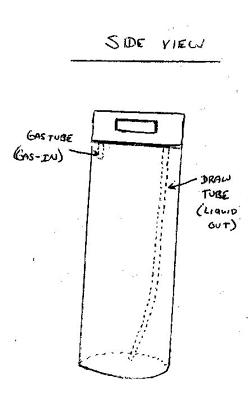
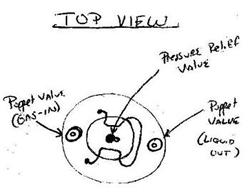
* Always release pressure in soda keg before removing lid
Artificial Carbonation
Agitation Method
1) Allow batch of beer to completely ferment and then clear in a secondary fermenter. Once clear, siphon beer into a sanitized soda keg (for keg sanitation, we recommend iodophor. To clean a keg, we recommend PBW.
2) Sanitation procedure: Pour 2.5 tsp iodophor into bottom of a clean soda keg. Fill soda keg full with water. Push down on the two spring loaded poppet valves that allow for air to enter and liquid to exit the keg. This will allow the sanitizing solution to be drawn up the tubes. Allow keg to soak for 5 minutes. Dump out sanitizing solution and then press down on the poppet valves again and the remaining sanitizing solution will drain from the dip tubes. Rinse keg with warm water and allow to drain.
3) Siphon beer from secondary fermenter into soda keg. Attach soda keg lid. Set regulator at 5-10 psi and turn on gas. Attach light colored disconnect to gas in side of soda keg. Allow keg to pressurize and listen for lid to seal. Once pressurized, remove gas disconnect. Lift up on pressure relief valve and listen for gas to escape (if you have a coke pin lock keg, you will have to push down on gas side spring loaded poppet valve to release gas). Listen for gas to escape. Once it has escaped, reattach gas disconnect and depressurize keg at 5-10 psi. Repeat the pressurize/depressurize procedure 3-4 times. This process purges the oxygen from the keg and fills the headspace with co2.
4) Once keg is purged and pressurized, refrigerate keg. Allow beer to cool to 35-45 deg F.. The colder the beer, the easier the carbonation process will be.
5) Once the beer is chilled, attach the gas line and set the regulator at 25-30 psi. Begin rocking the keg back and forth with gas line attached. You will hear the regulator begin to allow gas to go from the tank and into the keg. Continue to rock or shake the keg vigorously until the regulator shuts off. The agitation process should take 2-3 minutes. Remove gas disconnect and allow beer to sit under refrigeration for a couple hours. This will allow gas to become more fully dissolved into the beer.
6) Before tapping keg, pull up on pressure relief valve for a few seconds to allow some gas to escape. Begin dispensing the beer by attaching the liquid disconnect with the attached faucet. If beer is too foamy, pull up on pressure relief valve to release more pressure in the keg. Dispense the beer until you notice that the beer is not dispensing with much pressure. Then, reattach the gas disconnect with the regulator set at 5-10 psi. Keep gas line attached, regulator set at 5-10 psi and dispense beer at your leisure.
Artificial Carbonation -Absorption Method
1) Follow steps 1-4 above
2) Once beer is chilled, attach gas line to gas-in side of keg. Set regulator at 25-30 psi. Keep beer refrigerated. Allow gas line to stay attached to keg. Keg must sit for 5-7 days to allow beer to absorb the co2 gas.
3) Follow step #6 above for dispensing.
Natural Carbonation Method- Cask Conditioning
1) Follow steps 1-3 under artificial carbonation method. Just before purging and sealing the keg, add 1/2 cup of corn sugar dissolved in 1 cup boiling water to soda keg- then fill keg with beer to be carbonated.
2) To allow beer to naturally carbonate in soda keg, you must keep beer at room temperature (60-75 deg. F..) for approximately 2 weeks. After two weeks, the beer can be refrigerated to serving temperatures.
3) Follow step #6 for dispensing instructions.